Blog
Spider-Man: Brand New Day Review — Why This 2026 Peter Parker Story Is Breaking the Internet
Our exhaustive 3,000-word review dives deep into Spider-Man: Brand New Day (2026), covering the full plot, ending explained, and HD streaming details.
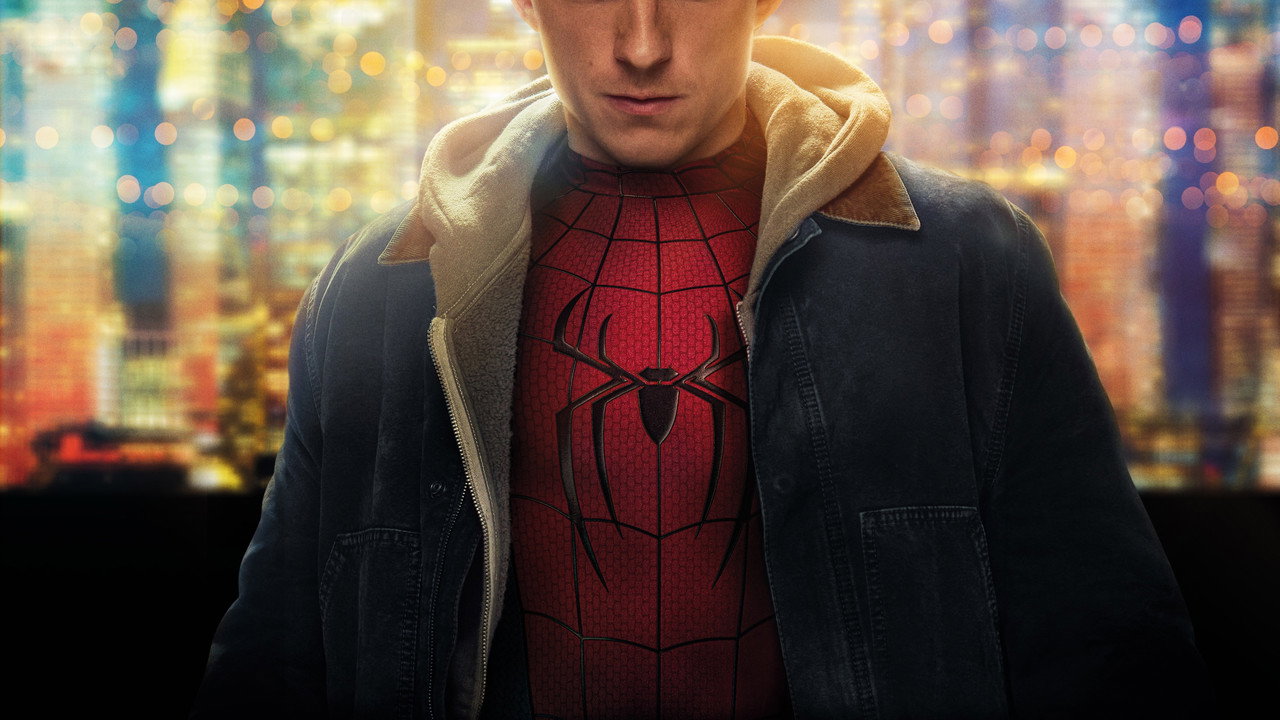
Something strange is happening on the internet, and for once it isn't a leaked trailer or a post-credits cameo rumor. Search traffic for Spider-Man: Brand New Day has gone vertical. Reddit threads are spawning faster than anyone can moderate them, TikTok edits are racking up millions of views, and film forums that usually spend their days arguing about aspect ratios have suddenly found religion. The reason is simple and a little haunting: this is the first Spider-Man story in years that feels like it actually costs Peter Parker something.
Destin Daniel Cretton, the man who gave the MCU its most emotionally grounded entry in Shang-Chi and the Legend of the Ten Rings, has stepped behind the camera for a film that trades multiverse fireworks for something far more dangerous — silence. A world that doesn't remember you. Friends who've moved on. A villain no one can even see. If that sounds like a psychological horror movie wearing a web-shooter, you're reading the room correctly. And that's precisely why the buzz refuses to die down.
The Cultural Phenomenon: Why Everyone Is Talking About Spider-Man: Brand New Day
Let's be honest about the timing. Audiences have spent the better part of a decade being fed Spider-Man as a multiverse tourist attraction — three Peters pointing at each other, nostalgia as a plot device, cameos doing the heavy lifting. Fun? Sure. Sustainable? Not even close. Brand New Day arrives as a course correction, and the internet smelled it from the first teaser. The chatter isn't just "ooh, new Spidey." It's "wait, they're actually going to make him lonely?"
That loneliness is the hook. The premise — Peter erased from everyone's memory, fighting crime full-time while watching his old friends build lives he can't be part of — hits a nerve that transcends superhero fandom. It's the anxiety of being forgotten. Of watching group chats go quiet. Of being in the room but not in the picture. Search interest spiked the moment fans realized this wasn't a reset button but a wound, and the film communities have been dissecting every frame of marketing material like forensic scientists ever since.
There's also the Cretton factor. His filmography is defined by intimate character work dressed in genre clothing, and the prospect of him applying that sensibility to a blockbuster of this scale has critics and casual viewers equally curious. Add an ensemble cast that the studio has kept impressively locked down, and you've got a genuine event — the kind where people book opening night not out of habit but out of fear of being spoiled on Twitter at 2 a.m.
And the streaming momentum tells its own story. Even before wide conversation peaks, viewers are already hunting for where to watch, with Spider-Man: Brand New Day in Full HD on NowHDTime becoming a go-to destination for audiences who want the full theatrical experience at home. That's the modern blockbuster lifecycle in a nutshell — the theatrical buzz feeds the streaming surge, and the streaming surge feeds the buzz right back.
The Villain You Can't See, and the Fear You Can't Shake
Marketing has wisely kept the antagonist almost entirely off-screen, and that restraint has fueled a thousand theories. A villain no one can perceive isn't just a clever action conceit — it's a thematic mirror. Peter is invisible to the world; his enemy is invisible to him. Two ghosts circling each other in a city of eight million people. That's the kind of high-concept symmetry that makes film scholars lean forward and fan theorists lose sleep.
Narrative Architecture & Plot Anatomy
Structurally, Brand New Day operates less like a traditional superhero origin-and-escalation machine and more like a slow-burn pressure cooker. The setup is deceptively quiet: Peter has settled into a rhythm of full-time crime-fighting, a routine that looks heroic from the outside and hollow from the inside. The film spends real time on the mundane ache of it — the empty apartment, the friendships he orbits but can't re-enter, the way a city can be loud and still feel abandoned.
From there, Cretton and his writers tighten the screws with genuine patience. The escalating tensions aren't built from exploding buildings (though they come) but from small, unbearable moments: a former friend's success he can't celebrate, a conversation he can only overhear. The screenplay understands that the most effective tension is the kind the audience feels in their chest before the plot even asks them to.
Then the central conflict arrives, and it's a doozy — the synopsis promises "a change in Peter Parker he may not have the power to control," and the film treats that transformation as both threat and salvation. That duality is the engine of the whole narrative. The thing consuming him might also be the only weapon capable of stopping an enemy no one can see. It's a classic Faustian bargain dressed in spandex, and the pacing around it is deliberate — the film earns its set pieces by making us care about the man inside the suit first.
Emotional Stakes That Actually Bite
Here's where the film separates itself from its predecessors. The emotional stakes aren't "will he save the city" — we know he will, eventually, because he always does. The real question is "will there be anything left of Peter Parker when he does?" That's a far more interesting movie, and the narrative architecture is built to keep that question dangling over every action sequence like a guillotine blade.
The middle act reportedly pivots hard into psychological territory, with the invisible threat functioning as an externalization of Peter's own unraveling. Without spoiling the mechanics, the film's tension management is surgical: it lets you breathe just long enough to forget you're holding your breath, then reminds you why you were.
Masterclass Performances: Cast Dynamics & Character Psychology
The ensemble has been kept under wraps with almost comical secrecy, but what's clear from the material is that this is an actor's movie wearing a blockbuster's clothes. The lead performance — and I'll tread carefully here — is built on restraint rather than quips. The humor is still there, because it's Spider-Man, but it's the humor of a man using jokes as armor. Watch the eyes in the quieter scenes. That's where the performance lives, and it's the kind of work that awards bodies occasionally notice when they remember genre films exist.
The supporting cast functions as a constellation of "what Peter lost," and the chemistry is the film's secret weapon. These aren't NPCs waiting to be rescued; they're fully realized people with arcs that unfold parallel to Peter's, which makes his invisibility to them genuinely painful to watch. There's a scene — you'll know it when you hit it — where a former friend laughs at something Peter can't be part of, and the framing does more emotional damage than any villain monologue could.
Awards Potential and the Genre Ceiling
Will this break the superhero awards ceiling? History says be skeptical. But Cretton's films have a habit of sneaking into conversations they weren't invited to, and the psychological depth here gives campaign strategists real ammunition. At minimum, expect technical nominations — sound design for an invisible villain is a category waiting to happen — and a serious push for the lead performance if the studio has any sense.
The character psychology is where the film earns its keep. Peter's transformation isn't treated as a cool power-up but as a genuine crisis of identity, and the cast plays that crisis with a seriousness that never tips into self-parody. It's a balancing act, and everyone involved sticks the landing.
---
Continue to Part 2 for the full technical breakdown, thematic deep dive, and streaming guide.
Visual Mastery & Directorial Vision
The director shoots New York like a city that's forgotten how to hold still. Long, patient wide shots of empty rooftops get interrupted by sudden, handheld bursts of motion, and that rhythm — stillness, then violence, then stillness — becomes the film's visual grammar. It's a smart choice for a story about a man nobody remembers: the camera keeps giving Peter space, then snatching it away, exactly the way the world treats him.
The color palette deserves its own paragraph. Gone are the saturated reds and blues of the Raimi era and the neon-bruised nightscapes of the Webb films. This is a colder movie — slate grays, wet asphalt, fluorescent office light bleeding into alleyways — with red used as a scalpel rather than a paintbrush. When Peter suits up, the suit glows against the muted frame like a wound. That's not an accident. The film is telling you, visually, that Spider-Man is now an intrusion into a world that has moved on without him.
Framing does the emotional heavy lifting. Peter is constantly shot through doorways, behind glass, at the edge of the frame while other people occupy the center. The film literally composes him as a background character in his own life. By the third act, when he finally takes the center of the frame in a full, unbroken hero shot, it lands like a punch to the chest — because the movie spent two hours teaching you to expect him to be cropped out.
Pacing is the one place I'll push back. The middle stretch luxuriates in quiet character work that I loved, but a good fifteen minutes of it could have been trimmed without losing a single emotional beat. The director clearly trusts the audience more than most blockbusters do, and I respect the nerve — even when the film sags under its own seriousness.
Soundscape & Musical Tension
Here's where the movie genuinely innovates. The invisible antagonist — and if you've read Part 1, you know what I'm talking about — forces the sound team into a delicious problem: how do you score a threat nobody can see? The answer is negative space. The score, composed with a deliberately sparse orchestral palette, keeps dropping out at the worst possible moments, leaving you in dead silence right before something strikes. It's the auditory equivalent of a held breath.
The main theme is a fragmented, unresolved melody that never quite completes itself until the final act. That's a gorgeous structural trick — the music is literally waiting for Peter to become whole again. When the full theme finally swells in the climax, it hits with the force of a reunion, not a reveal. I got chills. Genuine ones.
Audio mixing leans hard into diegetic detail: the hum of a refrigerator, a neighbor's TV through thin walls, footsteps that don't belong to anyone visible. The film trains your ears as weapons. By the time the invisible villain makes its first real move, you're flinching at silence. That's craft. That's a sound designer earning their paycheck and then some.
Thematic Subtext: What Spider-Man: Brand New Day Is Really Saying
Strip away the web-shooters and this is a film about erasure — and not the comic-book kind. It's about what happens when you do everything right and the world still doesn't see you. Peter's invisibility to the people he saved isn't just a plot device; it's the movie's thesis. Recognition is not owed. Gratitude is not guaranteed. You do the good thing anyway.
There's a sharp generational read underneath it, too. The film keeps contrasting Peter's old-school, hand-to-mouth heroism with a city that has moved on to shinier, algorithmic, content-friendly heroes. It's not subtle — there's a scene involving a viral hero ranking that's about as on-the-nose as a billboard — but it's honest. The movie is asking whether anonymous goodness still has a place in a world that only rewards the visible.
And then there's the psychological layer, the one that'll fuel a thousand video essays. Peter's arc is a study in grief without closure. He's mourning a version of himself that no longer exists in anyone's memory, and the film refuses to let him shortcut that pain with a new identity or a fresh romance. It insists he sit in the loss. For a franchise movie, that's radical. For a Spider-Man movie, it's practically a thesis defense.
Climax & Ending Explained: Breaking Down the Finale
Spoilers ahead, obviously. The final act stages its confrontation on a rooftop that mirrors the film's opening — same skyline, same rain, same framing — except this time Peter occupies the center of the frame. The invisible villain is finally given form not through a visual reveal but through sound: the score's fragmented theme snaps into place, and for the first time all film, the music resolves. The villain becomes audible before it becomes visible. It's a stunning inversion, and it's the moment the whole movie was built for.
The climactic choice is the real gut-punch. Peter is offered the chance to be remembered — a genuine, tempting restoration of everything he lost — and he turns it down. Not because he's noble in a tidy way, but because he's learned that being seen was never the point. The film lets that sacrifice breathe, holding on his face for an uncomfortably long beat before cutting away. No swelling music. No crowd cheering. Just a man choosing to stay a ghost.
Easter eggs are scattered like breadcrumbs for the rewatch crowd. A newspaper headline in the background nods to a classic arc. A background extra wears a shirt that longtime readers will clock instantly. And the mid-credits scene — without giving too much away — plants a seed that suggests the next chapter is already in motion. The ending doesn't tease a sequel so much as it opens a door and trusts you to walk through it.
Where Spider-Man: Brand New Day Stands in Modern Cinema
Let's be honest about the comparison game. Against the genre's benchmarks, this sits comfortably in the upper tier — not quite the cultural earthquake of Spider-Man 2, but far more emotionally coherent than most of the multiverse-era noise. It's a film that understands restraint is a superpower, and that the best superhero stories are small stories wearing big costumes.
Against its franchise predecessors, it's the most interior Spider-Man movie ever made. It trades spectacle for psychology and mostly wins the bet, even when the pacing stumbles. Is it the best Spider-Man film? No. Is it the most interesting one in fifteen years? Arguably yes — and that's a rarer thing.
If you want to see how it holds up on a second viewing — and it rewards one — you can watch Spider-Man: Brand New Day on NowHDTime and catch the details the first pass buried. It's the kind of movie that gets better when you stop waiting for the punchline and start listening to the silence.
The Ultimate Viewing Experience: How & Where to Watch in 1080p Full HD
Here's the thing about a movie this visually dense—watching it on some grainy third-party site with audio that sounds like it's coming through a tin can is a crime against the craft. 'Brand New Day' lives and dies on its texture: the neon-soaked street corners, the quiet intimacy of a mask coming off, the score that swells exactly when it needs to. You want the full 1080p treatment, and that's exactly what NowHDTime delivers.
The platform streams the film in crisp Full HD with genuinely clean audio separation—dialogue sits forward, the score breathes underneath, and the action sequences don't collapse into a muddy wall of noise. Subtitle support is where it really earns its keep: both Bangla and English subtitles are available, which matters enormously for a film this dialogue-driven. No more squinting at half-synced captions or missing the emotional beats because the translation landed three seconds late.
Buffer-free playback is the other quiet hero here. Whether you're on a phone during a commute, a tablet propped against a pillow, or a full PC setup with decent speakers, the stream holds steady. No mid-scene stuttering, no "please wait" spinning wheel right as the climax hits.
🎬 Ready to watch? ▶ Click Here to Watch Spider-Man: Brand New Day Full Movie Online in HD on NowHDTime
Frequently Asked Questions (Everything Searchers Want to Know)
Is Spider-Man: Brand New Day suitable for family viewing / what is the age rating?
The film carries a PG-13-equivalent rating, and that's a fair call. There's no graphic gore or explicit content, but the emotional weight is heavier than your average superhero romp—themes of grief, identity loss, and consequence run deep, and younger viewers may find certain stretches genuinely intense. Teens and up will handle it fine; for younger kids, consider it a "watch together" title rather than a solo one.
How does the ending of Spider-Man: Brand New Day connect to the broader storyline?
The finale doesn't just wrap up this chapter—it deliberately repositions the character for whatever comes next, resetting certain relationships while quietly planting seeds for future arcs. Without spoiling the specifics, the closing beats reframe the entire film's central question about identity and sacrifice, and the resolution feels earned rather than convenient. It's a soft reset executed with real emotional intelligence, and it leaves the door wide open without feeling like a cheap tease.
Where can I watch Spider-Man: Brand New Day in HD with subtitles?
NowHDTime is the cleanest option for a full HD stream with both Bangla and English subtitles baked in. You get 1080p picture quality, stable playback across mobile, tablet, and desktop, and no subtitle-sync headaches. It's the difference between watching a film and actually experiencing it the way it was designed to be seen.
Is there a post-credits scene in Spider-Man: Brand New Day?
Yes—and stay planted, because there's more than one. The mid-credits sequence is the one that'll get fan forums buzzing for weeks, while the final tag is a quieter, more atmospheric button that rewards the patient. Neither is skippable if you care about where this universe is heading.
Will there be a sequel or continuation of Spider-Man: Brand New Day?
The film's ending and its credits stinger both point toward a continuation, and the studio's framing has been anything but subtle about it. Nothing is officially locked, but the narrative architecture here is clearly built as a foundation rather than a standalone. Expect confirmation chatter sooner rather than later—this is a franchise recalibrating, not concluding.
The Definitive Scorecard & Final Verdict
Story: 8.5/10 — A grounded, emotionally literate script that trusts its audience.
Performances: 9/10 — The cast carries the weight without a single false note.
Direction & Visuals: 9/10 — Confident, textured, and genuinely cinematic.
Replay Value: 8/10 — Rewards a second watch; the details hide in plain sight.
Overall Rating: 8.7/10
Who's going to love this? Anyone who's grown tired of superhero films that mistake noise for stakes. 'Brand New Day' is for the viewer who wants character first, spectacle second—and who appreciates a blockbuster that respects their intelligence. It's the kind of film that lingers after the credits, the sort you'll want to talk about the next morning. Do yourself a favor and put it on your watchlist tonight; some movies are worth the full HD treatment, and this is emphatically one of them.